Key takeaways
- A couples cooking class in Sri Lanka is a village-kitchen booking first and a romantic activity second. Get the kitchen right and the rest follows.
- Village group classes on the south coast typically run 4,000 to 9,000 rupees per person including the meal you sit down to afterwards. Private sessions for two usually land between 12,000 and 25,000 rupees.
- The morning slot includes the market. The afternoon slot does not, and it ends with you eating as the light goes.
- Book two days ahead at minimum. The household shops for your menu, so a same-day request usually means a thinner table.
- December through March on the south and west coasts, May through September on the east. Rain does not cancel a class, but it changes which garden vegetables show up.
The booking decision most couples get backwards
People choose the destination first and the kitchen second. Do it the other way round.
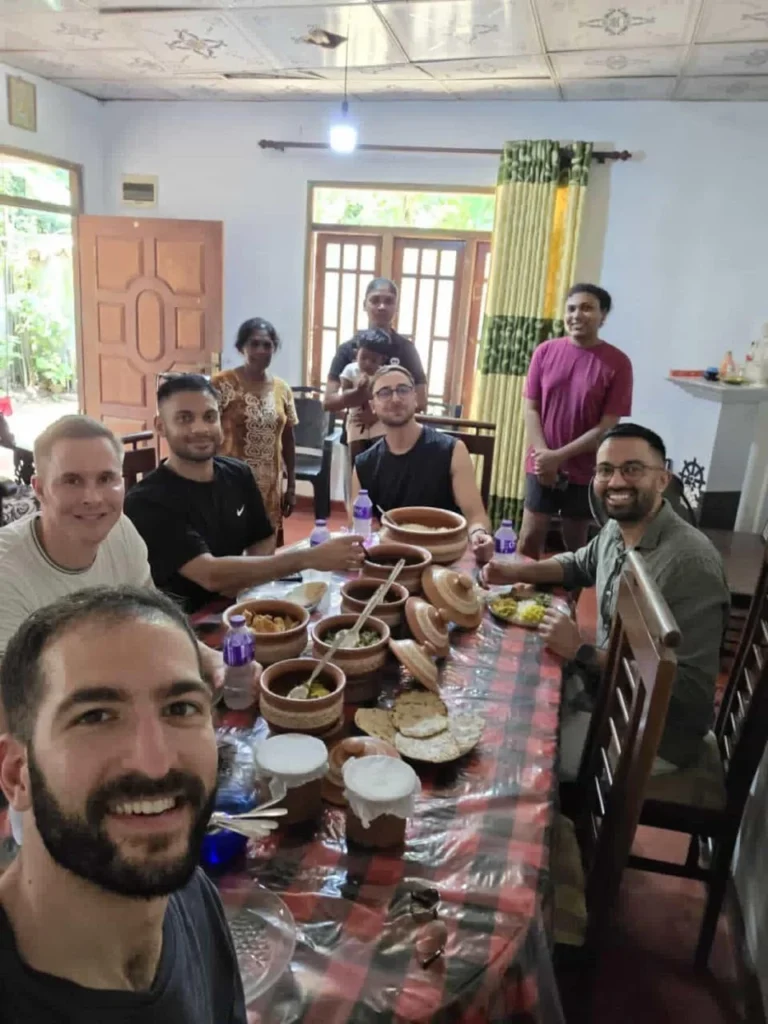
Almost every beach town in Sri Lanka now has something advertised as a cooking class, and the listings read identically. What separates a good afternoon from a forgettable one is whether you end up in a family home or in a hotel demonstration room with a stainless steel bench and an extractor fan. Both teach real recipes. Only one of them puts you at somebody’s own table afterwards, with the grandmother correcting your coconut technique and a dog asleep under the chair.
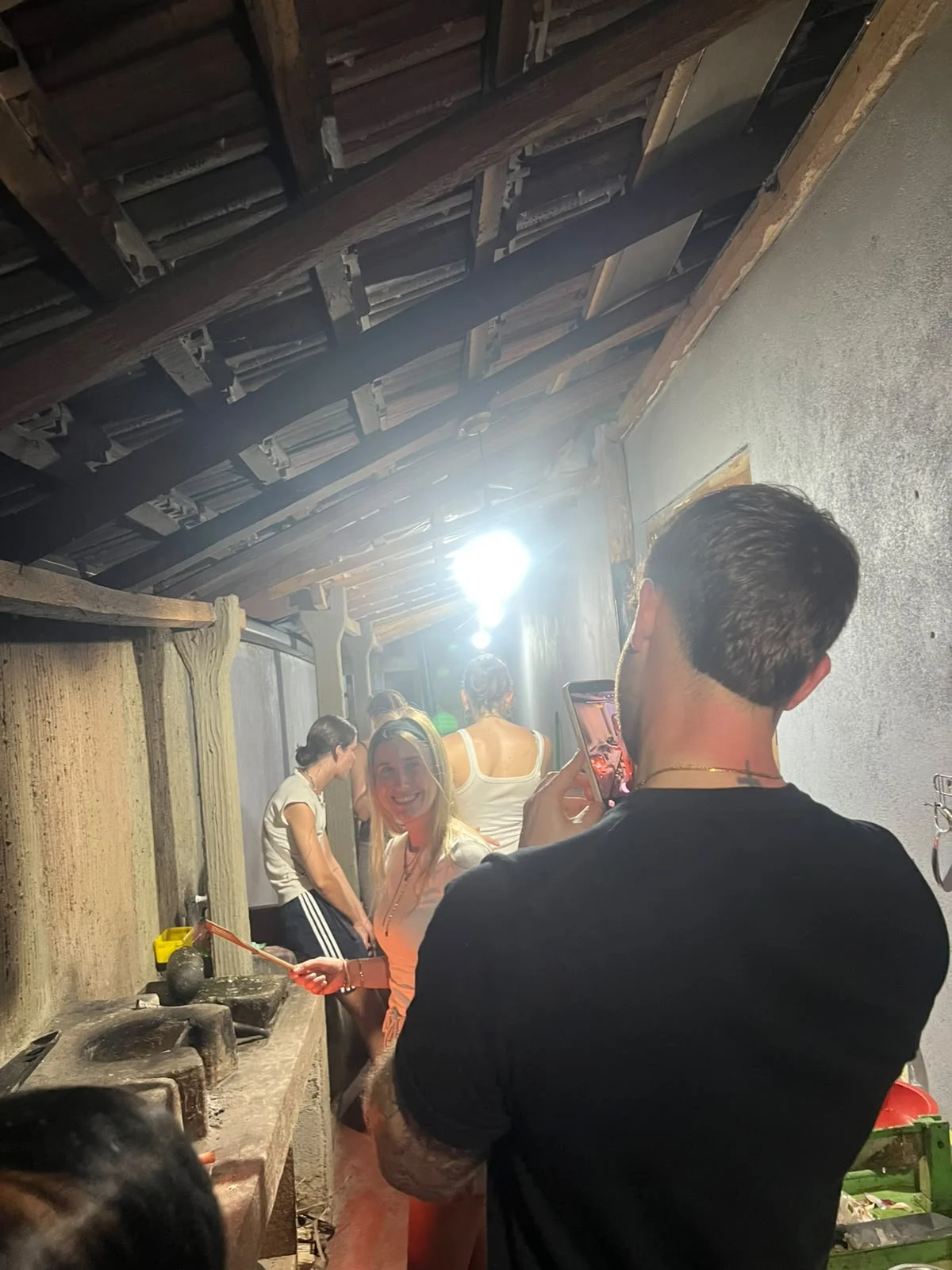
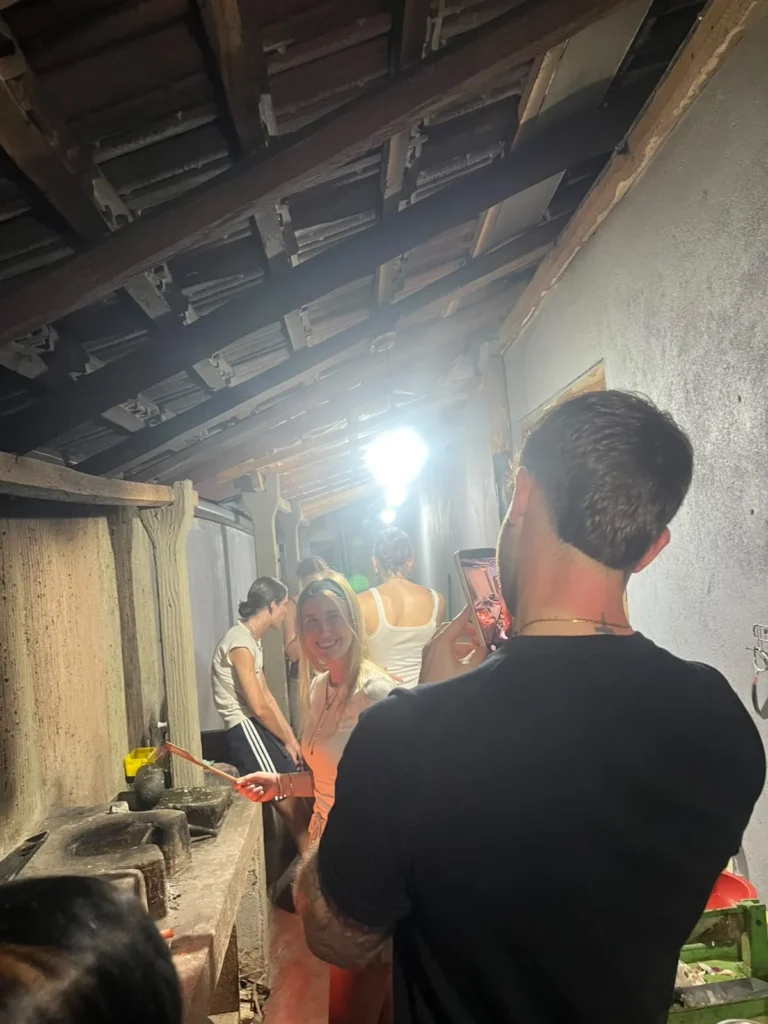
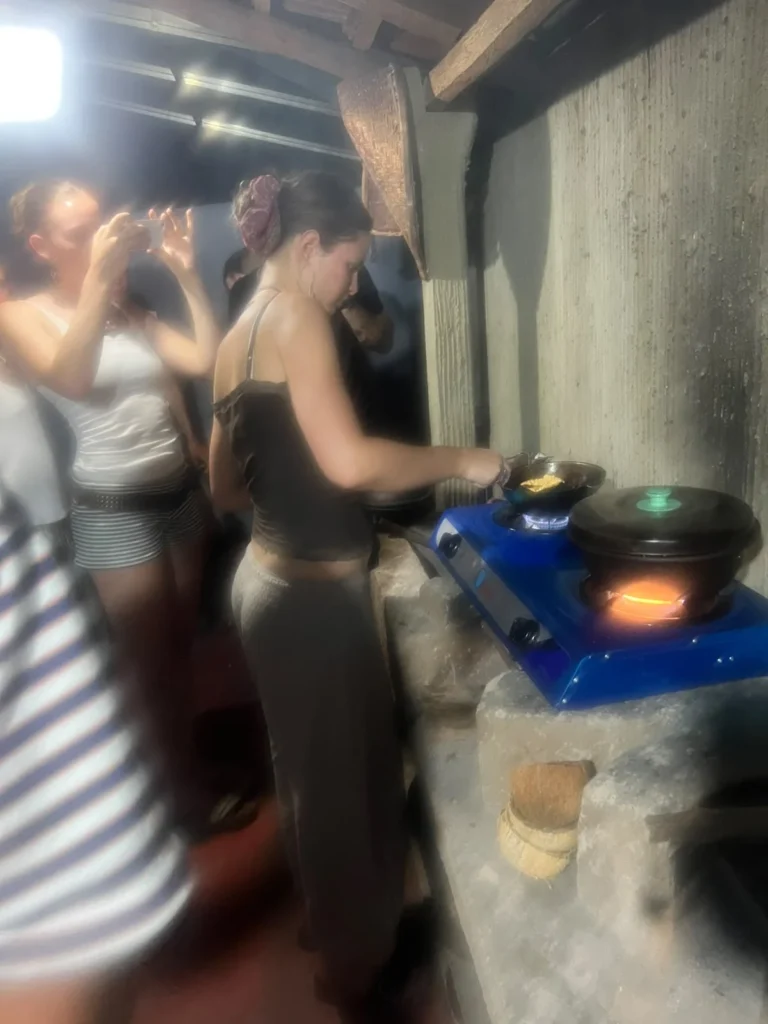
We send guests to a family home inland from Weligama, and it is not a slick operation. The roof is clay tile, the rafters are open, the fire is wood, and the menu shifts depending on what the garden gave up that week. If you and your partner both find that appealing, book the village. If one of you is honest about disliking heat, smoke and improvisation, book the hotel class and enjoy it, because four hours of quiet resentment is not a romantic afternoon.
We wrote a longer piece on how to spot the difference from a listing, since the wording almost never tells you but the photographs always do.
Where to book it, region by region
South coast, Weligama to Mirissa
The densest cluster of genuine village classes, and the easiest to reach if you are already doing a beach stretch. Households here have been hosting travellers long enough to have the rhythm right without having sanded off the edges. Best paired with a morning market run in Weligama.
Galle and the fort
More seafood-led. If you want your class to start at a fish auction rather than a vegetable stall, this is the version to book. We covered what a Galle seafood class actually involves separately, because the fish market half is the point.
Ella and the hill country
Cooler, greener, and the produce is different. Fewer coconut palms, more leafy greens and root vegetables, and the whole thing feels less tropical and more mountain-farmhouse.
Kandy and the cultural triangle
Handy if your itinerary is temple-heavy rather than beach-heavy. Classes here often lean into the older ceremonial dishes.
Morning or afternoon, and why couples usually want the afternoon
The morning session starts at a market. You walk through it with your host, they explain what they are buying and why, and you carry it back. It teaches more. It also means being awake and functional early on a holiday.
The afternoon session skips the market and starts in the kitchen. You cook as the heat comes off the day, and you eat somewhere around dusk with the fire still going. For couples, that ending is worth more than the market beginning.
Neither version is short. Expect three to four hours, and do not schedule anything after it.
What lands on the table
A Sri Lankan meal is not one dish with sides. It is five to ten small curries eaten together off one plate, which is why the class runs as long as it does and why the timing is the actual skill. Sri Lankan cuisine leans much harder on coconut and on sour agents like goraka than most visitors expect from the word curry.
A typical afternoon produces:
Pol sambol. Fresh coconut, chilli, lime, red onion and a little Maldive fish, pounded rather than blended. This is the one couples try to recreate at home and fail at, because supermarket desiccated coconut is not the same ingredient.
Parippu. Red lentil dhal in coconut milk with curry leaves, pandan and turmeric.
A garden vegetable curry. Green beans, pumpkin, or jackfruit if the tree is producing.
Pol roti. Coconut flatbread you slap out by hand.
Red rice, which takes longer than white and tastes considerably better.
Buy cinnamon before you fly home. Ceylon cinnamon is a different species from the cassia sold as cinnamon in most Western supermarkets, and once you have cooked with the soft, crumbly real thing the substitute is a disappointment.
What it costs
Village group classes on the south coast generally run in the low thousands of rupees per person, meal included. Somewhere between 4,000 and 9,000 rupees per head is the normal band.
A private session for the two of you costs roughly two to three times the group rate per person, which on the south coast usually means 12,000 to 25,000 rupees for the pair including the food. Households vary.
Hotel classes cost several times the village rate. You are paying for air conditioning and printed recipes.
For couples specifically, we generally steer people towards the group class rather than the private one, which sounds counterintuitive on a romantic trip. The reasoning is here, but the short version is that the other guests are part of what makes the afternoon good.
Pay in cash where you can, and tip the household directly.
When to go
The island runs two opposing monsoons, so there is no bad month, only a wrong coast for the month you have picked. December to March suits the south and west. May to September suits the east. Lonely Planet’s Sri Lanka pages lay out the seasonal split, and the official tourism board keeps a regional calendar.
Rain rarely cancels a class, because the kitchen has a roof and the fire does not care. What changes is the vegetable list, and honestly that is part of the appeal.
Making it feel like a date rather than an activity
The thing nobody tells you: you will both be terrible at scraping coconut. It is a low wooden stool with a serrated blade bolted to one end. You sit on it and drag half a coconut across the blade until white threads fall into the bowl. Your host fills a bowl in ninety seconds. Your first attempt yields about a tablespoon and a sore wrist.
That is the moment the afternoon either becomes competitive or becomes funny. Usually both.
A nice dinner gives you three hours facing each other. A cooking class gives you three hours standing shoulder to shoulder being equally incompetent at something, which loosens conversation in a way a set menu never manages. It also solves the day-five problem on a beach holiday, when you have swum, eaten, read and are quietly running out of things to do together that are not more of the same.
Frequently asked questions
How much does a couples cooking class in Sri Lanka cost?
Village group classes run roughly 4,000 to 9,000 rupees per person including the meal. A private session for two typically costs 12,000 to 25,000 rupees total. Hotel-based classes cost several times more.
How long does a Sri Lankan cooking class take?
Three to four hours for a village class, including eating. Morning sessions with a market visit run at the longer end.
Do we need to book in advance?
Yes, ideally two days. The household shops specifically for your menu, and a last-minute booking means a smaller spread.
Is a private class better for couples?
Not usually. Group classes cost less and the other guests add to the afternoon. Book private if you have dietary restrictions, very limited time, or you want to personally cook every step rather than share the pot.
Can vegetarians and vegans do a Sri Lankan cooking class?
Easily, with no special arrangement. Most of the standard village menu is already plant-based. Mention it when booking so the household skips the Maldive fish in the pol sambol.
Is it too spicy?
Village kitchens adjust chilli levels on request without complaint. Say so at booking rather than at the stove.
What should we wear?
Something you do not mind smelling of woodsmoke afterwards. Closed shoes. The smell does not fully wash out of hair until the next day.